
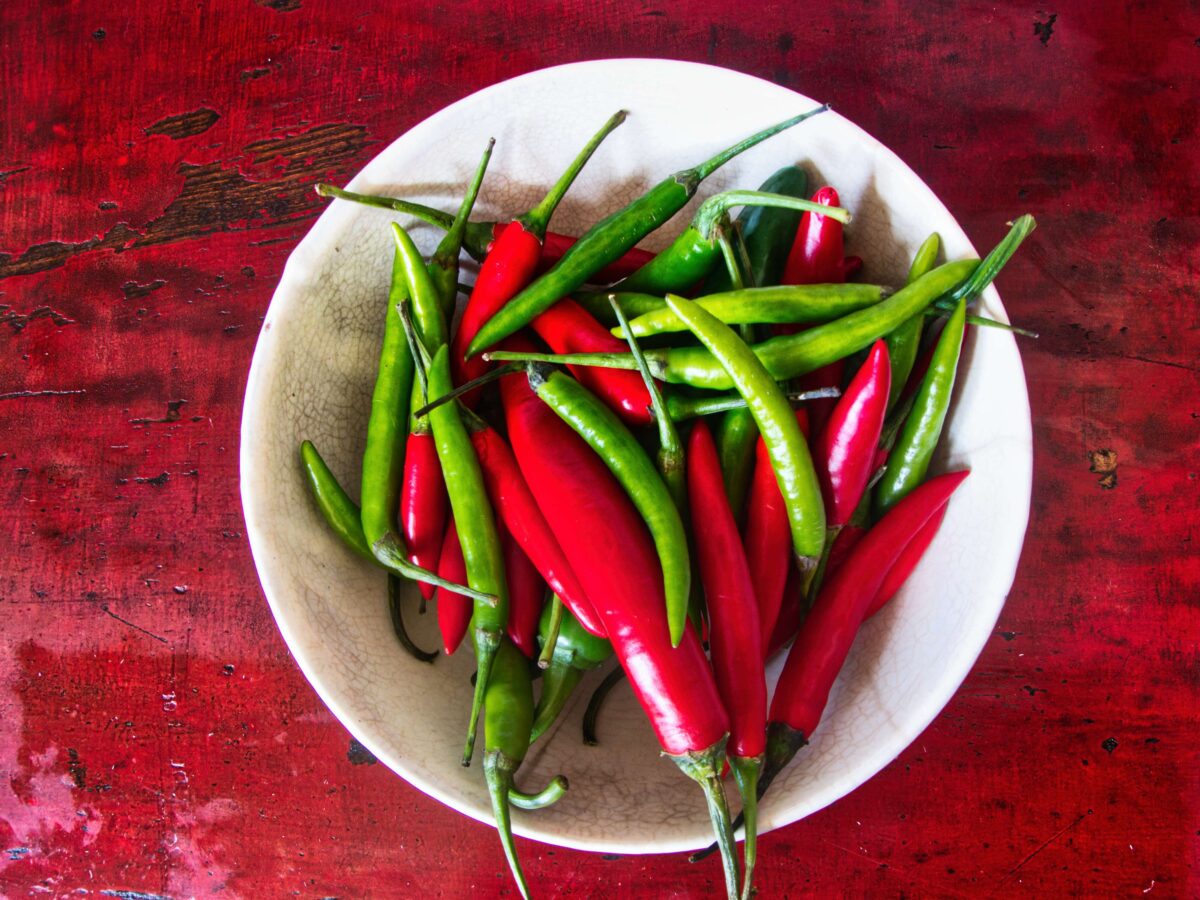
Walk into a Thai kitchen and you’ll smell it before you see it — that sharp, citrusy sting that catches the back of your throat and makes your eyes prickle. Thai Chillies are everywhere: chopped on the board, sizzling in oil, or crushed in the mortar with garlic and salt. It’s the heartbeat of Thai cooking — not because of its heat alone, but because of the life it brings to every dish.
For me, Thai food wouldn’t be the same without that energy. It’s not just spice — it’s the excitement that ties the meal together.
What Exactly is Chilli?
Thai Chillies belong to the Capsicum family, cousins to tomatoes, potatoes, and eggplant — all part of the nightshade clan. Botanically, it’s a fruit, but in the kitchen, it behaves like a spice.
The fiery sensation comes from capsaicin, an alkaloid compound concentrated in the seeds and inner membrane. That’s where roughly 90% of the heat lives. When capsaicin hits your tongue, it binds to the nerves that sense pain and temperature, tricking your brain into thinking you’re burning. In return, your body releases endorphins — natural painkillers that create that unmistakable “chilli high.”
That small thrill is addictive. Once you get used to it, food without it feels flat. It’s why chilli lovers keep chasing that tingle on the lips and warmth in the chest.
Beyond the sensation, chillies are packed with goodness: vitamin C, carotene, B6, potassium, magnesium, and iron. They speed up metabolism, boost circulation, clear the sinuses, and can even help with joint pain and immunity. Nature’s stimulant — and a delicious one.
The Varieties of Thai Chillies
Chillies come in every shape and colour — from squat and mild to long and fiery — and Thai cooks use them all with precision. Each has its own job and character.
Prik Kee Noo (Bird’s Eye Chilli)
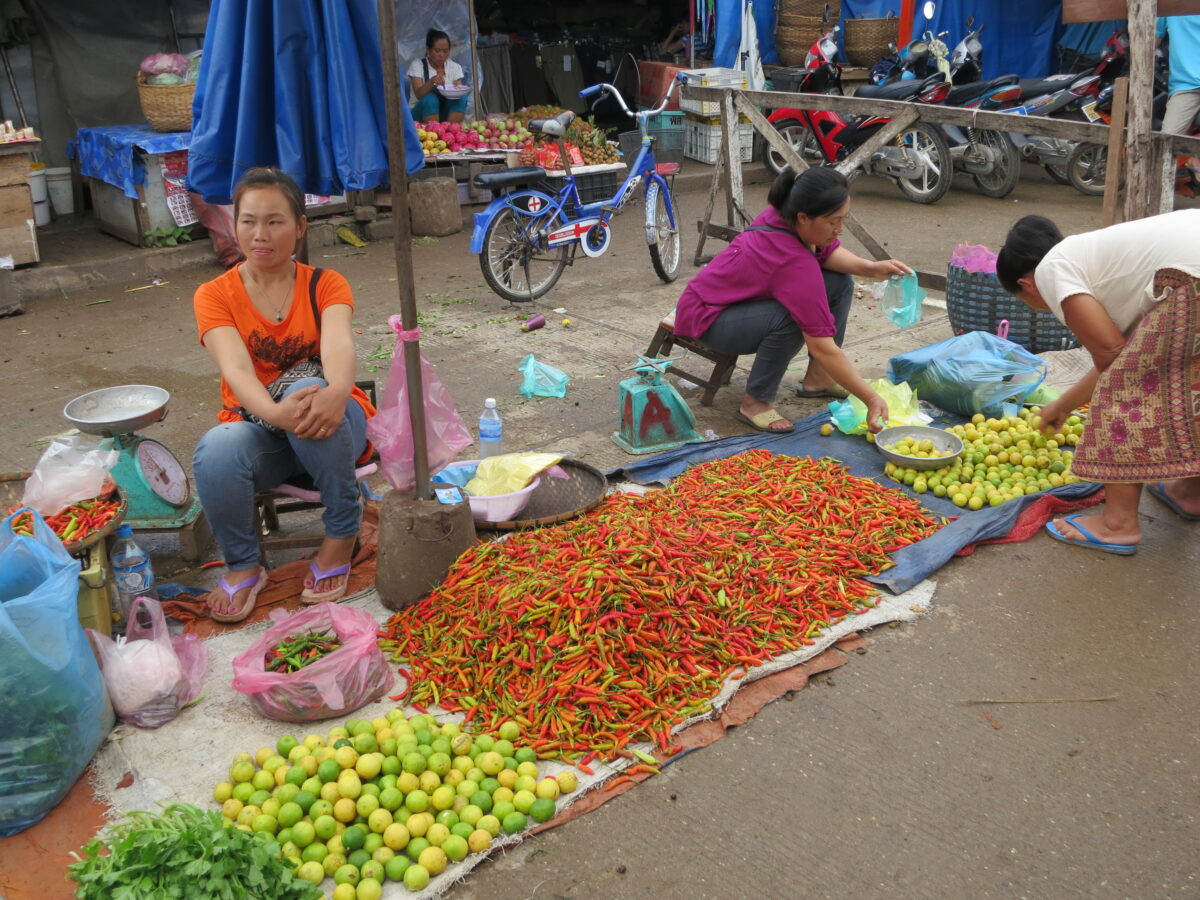
Tiny, fiery, and full of aroma. These are the chillies that give som tum (green papaya salad) and larb their spark. When you crush them, the perfume is immediate — sharp, fresh, and floral. They burn bright and fast, then fade, leaving a warmth that lingers just long enough.
Prik Chee Fa (Spur Chilli)
Long, smooth, and less intense. They’re used in stir-fries and soups where you want warmth, not a knockout punch. They add colour and a mellow heat that builds slowly.
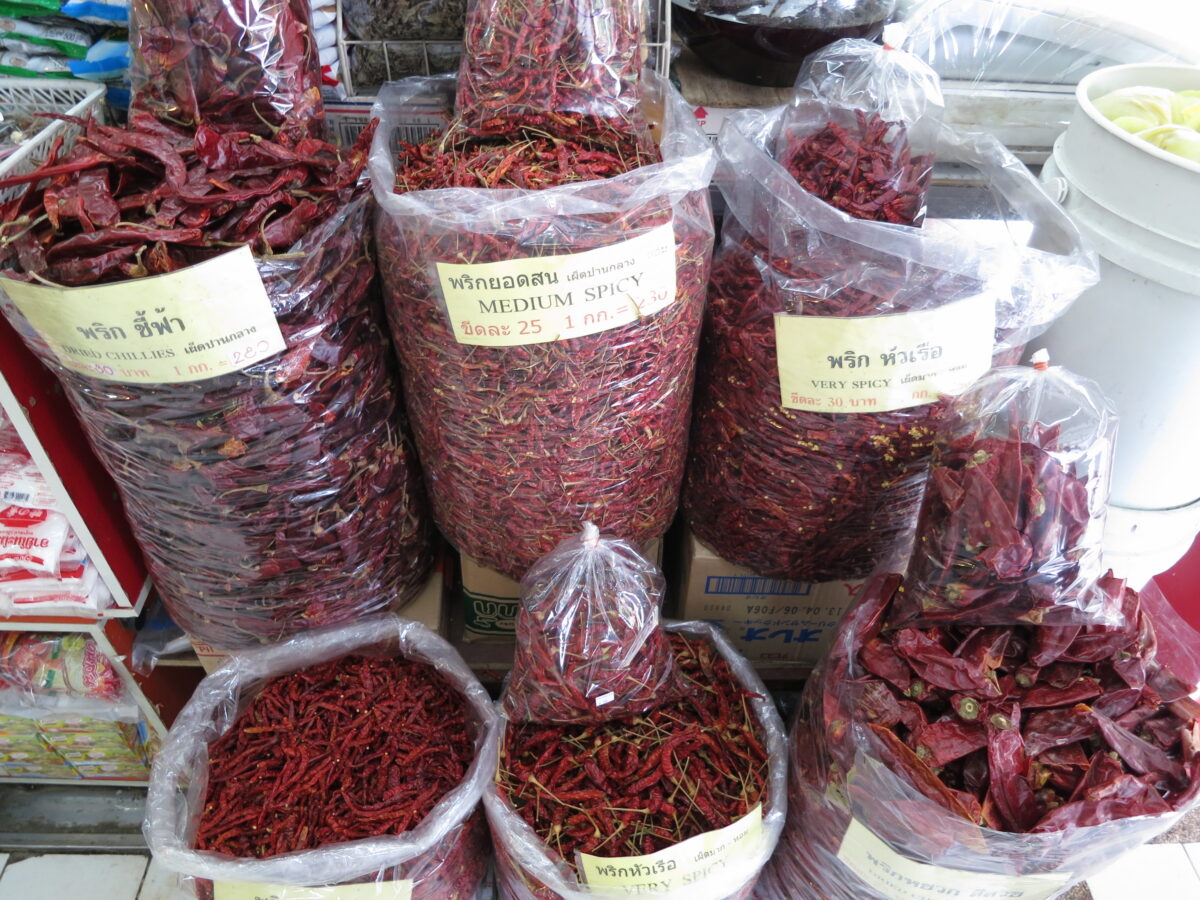
Dried Red Chillies
The backbone of curry pastes. Toasted briefly, then soaked and pounded, they add a deep red hue, gentle smokiness, and rounded heat. The balance between sweet, hot, and earthy makes them essential in red curry and nam prik pao (roasted chilli paste).
Fresh Green Chillies
Used for green curries and fresh relishes, they bring grassy notes and bright acidity. Their flavour is less smoky and more vibrant, which suits dishes based on coconut milk, herbs, and lime.
Large Mild Red Chillies
Used more for their colour and crunch than for heat. You’ll see them sliced over salads, soups, or as a garnish — providing texture and a touch of sweetness.
Thai cooking treats these varieties like musical notes: each one hits differently, and together they create harmony. The right chilli isn’t chosen for its heat — it’s chosen for its personality.
How Chillies Are Used in Thai Cooking
Chillies appear in every form imaginable — fresh, dried, fried, pickled, pounded, or ground. How they’re used determines not only the heat but also the flavour and texture of the dish.
- Crushed or pounded: In curry pastes, dipping sauces (nam prik), and relishes. Pounding breaks down the flesh, releasing natural oils and spreading the heat evenly.
- Sliced or chopped: For stir-fries, salads, and soups. This keeps the heat sharp and bright, delivering little jolts of spice.
- Fried in oil: Infuses the oil with warmth and aroma — the base for countless stir-fries.
- Toasted and ground: For depth and smokiness in curry pastes or to sprinkle as a finishing spice.
- Pickled: A simple way to add acidity and freshness, often served alongside noodle soups or grilled meats.
- Condiment: A small dish of prik nam pla (bird’s eye chillies in fish sauce) sits on nearly every Thai table, letting each person tune the heat to taste.
There’s no one “right” amount. A Thai cook measures by instinct — adjusting the heat depending on the effect they want and how much spice the dish should carry. That heat is then balanced with palm sugar, lime juice to brighten and accentuate freshness, and coconut milk or cream to bring richness.
Working With Heat in Thai Chillies
Firstly, a warning — Thai chillies can burn. Always take care when preparing and using them. The compounds that cause the heat can stay on your skin for hours, so wash your hands well after handling chillies and keep your fingers away from your eyes. I always wear glasses when pounding chillies for pastes and sauces; even a tiny splash in the eye is trouble you don’t want.
Many years ago, in one of my kitchens, I asked a young assistant to de-seed a batch of green bullet chillies for a curry paste. I told him clearly to wear latex gloves to protect his hands. He ignored the advice, assuming he’d be fine. Ten minutes later, he was back, insisting the skin on his hands was peeling. It wasn’t — it was the capsaicin burning his skin. A hard way to learn, but a lesson he never forgot.
Controlling heat is part of the craft. Here’s how Thai cooks — and anyone learning from them — handle it:
- Start small: You can always add more, but you can’t take it out.
- Remove seeds and membrane: That’s where the fire lives; removing them gives flavour without too much burn.
- Crushing vs slicing: Crushed chillies spread heat evenly, sliced ones deliver pockets of intensity.
- Blend or pound: A mortar and pestle releases aroma and oil in a way no blender can replicate.
- Balance naturally: Coconut milk, palm sugar, lime juice, and cucumber all calm heat without dulling flavour.
- Trust your taste buds: Authentic Thai heat should excite, not overwhelm.
The secret is understanding that chilli’s role isn’t to dominate — it’s to wake up the other flavours.
The Character of Chilli in Thai Food
Chilli gives Thai food its character — vivid, intense, and sometimes gloriously extreme. Thai cooking doesn’t shy away from heat; it embraces it. That intensity wakes up the palate and brings everything else to life.
Chillies don’t just add fire — they amplify flavour. The sting of heat sharpens lime, brightens herbs, deepens fish sauce, and makes every element more vivid. A good Thai dish shouldn’t lull you to sleep; it should make you sit up and take notice.
Chilli brings zest, warmth, and energy. It’s what makes tom yum feel cleansing, pad krapow smell irresistible, and a simple nam prik addictive. It’s the ingredient that turns balance into excitement — raw, bright, and unapologetically alive.
A Cook’s Reflection
Chilli is more than just an ingredient — it’s part of the language of Thai cooking. It adds depth, energy, and contrast, turning simple flavours into something memorable.
Used with respect, chilli doesn’t overpower; it defines. It sharpens the senses, balances richness, and gives Thai food its unmistakable edge.
Whether it’s a handful of bird’s eyes in a salad, a deep red paste in a curry, or just a few slices in fish sauce, chilli brings life to the table. It’s not there to dominate — it’s there to make everything else shine.
Quick Reference: Common Thai Chillies and How to Use Them
| Name | Appearance / Heat | Typical Uses | Flavour Notes |
|---|
| Prik Kee Noo (Bird’s Eye) | Small, thin, very hot | Som tum, nam prik, larb, prik nam pla | Sharp, floral, bright heat |
| Prik Chee Fa (Spur) | Long, red, medium heat | Stir-fries, soups | Warm, mellow, slightly sweet |
| Dried Red Chillies | Wrinkled, deep red | Curry pastes, chilli oil, nam prik pao | Smoky, earthy, balanced heat |
| Fresh Green Chillies | Slim, green, medium-hot | Green curry, relishes, coconut-based dishes | Grassy, acidic, vibrant |
| Large Mild Red Chillies | Broad, glossy red, mild | Garnish, salads, soups | Sweet, fresh, crunchy |
Understanding chillies — their types, their heat, and how they behave — gives you real control over flavour. Whether you want a gentle warmth or a lively punch, the balance is always in your hands. In Thai cooking, chilli isn’t there to overpower but to support, sharpen, and enliven everything around it.
And while chilli defines Thai food today, it wasn’t always part of the story — But that’s for another post. Want to be notified of my latest post or recipe? Subscribe below and I’ll also send you a copy of my guide to the equipment and ingredients you need to get started cooking Thai food.
Leave a Reply